From the blog
Astrocartography Explained: How to Read Your Map Before a Move
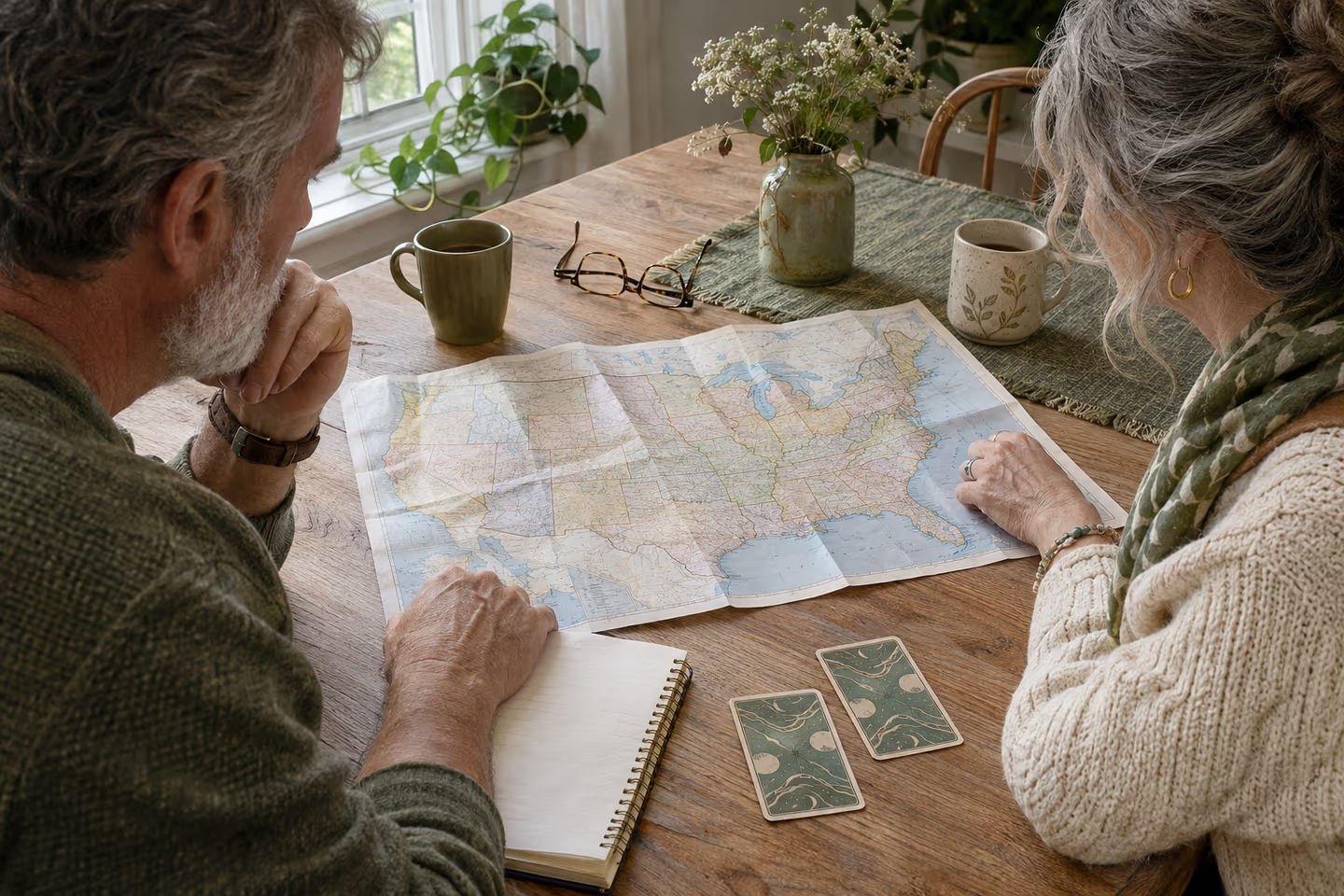
An astrocartography map shows where each planet was rising, setting, or crossing the local meridian at the moment you were born. Astrologers use those lines to explore what a place might bring to mind, from relationships to what makes a home feel right. If you’re considering a move, start with two cities you could realistically live in. Look up the same cities on your partner’s map if you’re moving together.
How to read an astrocartography map
You’ll need your birth date, birth time, and birthplace. Use the most reliable recorded birth time you can find. An estimate can shift the lines. If you only know that you were born sometime in the afternoon, treat the location of any line as provisional. Make a map with Astrodienst’s AstroClick Travel.
Find a city on the map and read the label on a line that runs nearby. The name identifies the planet. The letters show whether it was rising, setting, or crossing the upper or lower meridian.
| Label | What the planet was doing | What astrologers look at |
|---|---|---|
| AC or ASC | Rising on the eastern horizon | How you show up and get started |
| DC or DSC | Setting on the western horizon | One-on-one relationships and partnerships |
| MC | Crossing the upper meridian | Work and public life |
| IC | Crossing the lower meridian | Home and private life |
Take Venus DC. Venus is traditionally associated with affection and shared pleasures. On the DC, an astrologer might use it to talk about how you build relationships in that place. On Venus IC, the same planet would point the conversation toward what makes home feel comfortable. Astrodienst’s guide to astrocartography lines.
How close does a line need to be?
Zoom in on the city. If your tool gives you a distance, check that it measures from the city to the nearest point on the line. On a zoomed-out map, a line that looks close can run well beyond your area. Astrologers use different distance ranges, so write down the distance your tool reports and use the same method for both cities. A city with no nearby lines can stay on your shortlist. How distance is measured on an astrocartography map.
What if there are several lines near the city?
Write down the planet and angle for each line. Then start with the angle that fits your question. Say you’re looking for a quieter place to live and see both Moon IC and Jupiter MC nearby. The Moon IC gives you a way into the question about home. The Jupiter MC gives you a separate prompt about public life, such as whether you’d enjoy taking on a volunteer role. You can keep both notes without trying to score the city.
If you want more detail for one finalist, make a relocation chart for that city. It uses the same moment of birth and shows how the angles and houses look from that location. The map helps you spot nearby lines across a region. The relocation chart gives you a fuller view of one place. How relocation charts fit into a city comparison.
How two people can compare the same cities
Imagine Sam and Lee are planning for retirement. They’re weighing Asheville, North Carolina, where they have friends, and Richmond, Virginia, which would put them closer to family. The lines below are invented for this example.
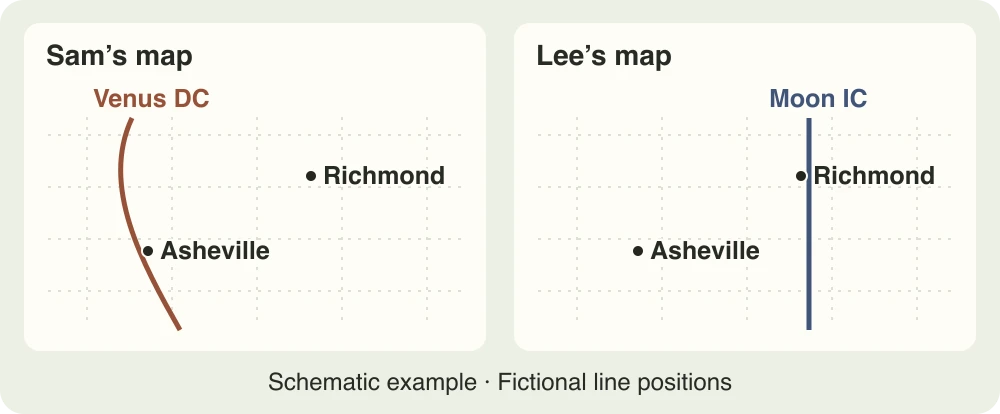
On Sam’s map, Venus DC runs near Asheville. Sam wants to know whether those friends are people they’d actually see on a Wednesday afternoon. On Lee’s map, Moon IC runs near Richmond. Lee pictures a standing Sunday lunch with family and wants to ask whether everyone would enjoy that. They record what they see for both people in each city, including places where the sample map shows no nearby line.
| City | Sam’s map note | Lee’s map note | What they want to check |
|---|---|---|---|
| Asheville, NC | Venus DC nearby | No nearby line shown | Spend a weekday in a neighborhood they can afford. See how often friends are around. |
| Richmond, VA | No nearby line shown | Moon IC nearby | Try the drive to family at the time they’d normally visit. Ask what regular visits would look like. |
To make your own version, put each city on a row and read each person’s map separately. Add one practical question you can answer on a visit or by making a call. If staying is an option, give your current city a row too. Before comparing the finished notes, write down one thing you each need from any move. A city can stay interesting on paper and still be too far from a person or service you depend on.
A three-card tarot spread to try together
Draw three cards together and assign one question to each. When you turn over a card, take a moment to look at the picture, then have both people answer the question.
- What would I like more of where we live next? Think of something you could do on an ordinary day.
- What part of my life here would I miss? Name a person, a routine, or a place you rely on.
- What am I assuming about the move? Pick something you can check before you decide.
If you draw the Six of Swords for the second question, its image of a crossing might get you talking about what you’d carry with you. Sam might realize their weekly dinner with friends matters more than the town itself. That gives them something specific to discuss while both cities are still on the list. More questions you can bring to a tarot reading.